The Quiet Backbone: Why Every Club Runs on Its Middle-of-the-Pack Players
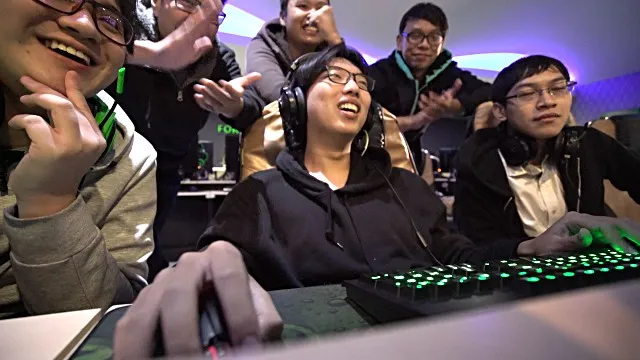
Photo: Lyncconf Games, CC BY-SA 4.0, via Wikimedia Commons
Every club has one. The player who never tops the leaderboard, never finishes dead last, never gets clipped for the highlight reel — but shows up every single week, orders the same wings, and keeps the lobby alive between matches.
At BHT Club Game, we think it's time somebody said it out loud: the most average player in your crew is the most important one. And if your game night isn't built for them, you're eventually going to lose them.
The Stats Don't Lie (Because Nobody's Tracking Them)
Look at the actual shape of your club. You've probably got one or two players who could go semi-competitive if they wanted to. Maybe one person still learning the controls. And then a big, quiet middle — the folks who've logged a couple hundred hours, know every map, and land third place so consistently you could set a watch by it.
That middle isn't a gap to be fixed. It's the load-bearing wall of the whole operation. They're the ones who fill a lobby when the stars cancel. They're the ones who remember the house rules. They're the ones who keep showing up after the shiny new game stops being shiny.
The Improvement Trap
Somewhere along the way, gaming culture imported the worst habits of gym culture and LinkedIn: the constant grind, the "we're all getting better every day" energy, the YouTube tutorials at 1 a.m. And look — there's nothing wrong with wanting to improve. But when a club's whole vibe becomes "everyone needs to be climbing," you send a quiet message to your mid-tier members: the way you are right now isn't good enough.
That message lands. And it doesn't make them practice more — it makes them find an excuse to skip Thursday. Nobody rage-quits a club. They just stop responding to the group chat.
Design Game Night for the Middle
If average skill is your actual norm, make it your actual standard. A few ways to do that:
- Pick games where the middle shines. Party-style and chaotic multiplayer titles — the kind where a well-timed banana peel beats raw reflex — flatten the skill curve naturally. Your aces can't carry, and your rookies can't be blamed.
- Rotate team captains. Nothing tells your mid-tier players they matter like handing them the draft pick for once. Randomized or rotating squads keep the same two carries from ending up on a team together every week.
- Score silly things. Track most-spectacular-failure, best trash talk, or the coveted "was in the right place at the wrong time" award. Suddenly the scoreboard isn't the only scoreboard.
- Kill the post-game film session. If someone wants to review their VOD, God bless them. But a club night that turns into a coaching clinic is a club night with an attendance problem next week.
Check In Before They Check Out
The sneaky thing about mid-tier burnout is that it's invisible. The carry complains loudly; the rookie gets encouragement; the middle just... absorbs it. They lose the close matches, take the friendly ribbing, and smile through it — until one week they're "busy," and then they're just gone.
So build the check-in into the culture. A quick "hey, you good with how squads have been shaking out?" in the group chat costs nothing. Making sure the same person isn't always the butt of the joke costs even less. And occasionally telling your steady-Eddie players — plainly, out loud — that game night wouldn't be game night without them? That's the cheapest retention strategy in the hobby.
The Manifesto, Short and Sweet
Here it is, in one sentence: a club where only the best player has fun is a club with a five-member shelf life.
The middle of the pack isn't a problem to be coached. It's the heartbeat of your table. Build the night around them, and the aces will still show up — because honestly, the aces are only aces when there's a full lobby to be an ace in front of.
See you Thursday. Third place is a great seat.