Nobody Wants to Say It Out Loud: Knowing When Your Club Has Outgrown Its Main Game
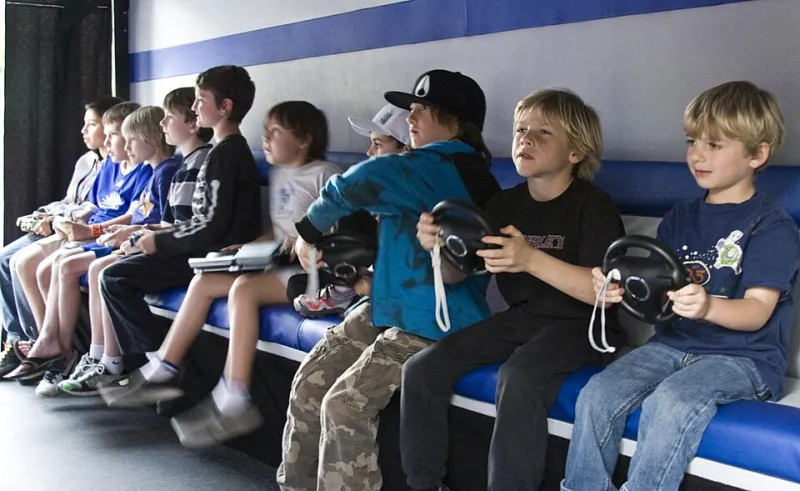
Photo: Gamesingear, CC BY-SA 3.0, via Wikimedia Commons
Every club has that one game. The one that built the group chat, named the Discord server, and ate every Friday night for the past year and a half. And every club eventually hits the same awkward moment: half the crew is quietly bored, nobody wants to be the first to admit it, and the group chat starts feeling a little too quiet on game night.
If you run a casual crew — the kind we love here at BHT Club Game — you'll face this eventually. The good news? A game migration doesn't have to mean a club funeral. Handled right, it's actually one of the best things that can happen to your group.
The Early Warning Signs Nobody Wants to Say
Burnout rarely announces itself. Instead, watch for the soft signals:
- The "eh, maybe next week" texts. When your most reliable regular starts hedging, that's not a scheduling problem. That's a game problem.
- Lobby time creeps later. Folks who used to log on at 7:30 now trickle in at 8:15. Nobody's excited to be early anymore.
- The side conversations get better than the game. If your crew spends more time in voice chat talking about everything except what you're playing, the game has become background noise.
- Someone keeps pitching "just one round" of something else. That's not a distraction. That's a trial balloon.
We talked to club leaders across a few long-running crews, and the pattern was consistent: by the time someone finally says "I'm kind of over this game," the rest of the group has been thinking it for a month. The trick is reading the room before the silence does it for you.
The Two-Lobby Compromise
Here's the move that has saved more clubs than any other: don't switch — split the night.
Run your main game for the first hour or so, then open a second lobby with the new title for anyone who wants to stay longer. It sounds simple, but it does something important psychologically: nobody loses anything. The diehards keep their ritual, the restless folks get fresh air, and nobody has to pick a side in a vote they never asked for.
A club leader we'll call Marcus (he runs a nine-person crew out of Columbus) put it this way: "We never voted to leave [our old game]. We just started staying later in the new one. Six weeks later, the switch had already happened. Nobody had to break up with anybody."
The 30-Day Trial Period, Formalized
If your crew likes a little structure — or if feelings are running hot — make the experiment official. A simple trial works like this:
- Pick one candidate game. Not three. One. Too many options turns a fun pivot into a committee meeting.
- Commit to four sessions. Everyone agrees up front to give it four honest game nights before any verdict.
- Debrief on night four. Quick thumbs up, thumbs down, or "one more month." Majority decides, and everyone agrees to live with it either way.
The magic of the trial period is that it lowers the stakes. Nobody's voting to abandon the old game forever — they're just trying something for a month. That framing keeps the longtime fans from getting defensive and keeps the fence-sitters willing to show up.
A Quick Migration Checklist
Before you pull the trigger, run through this:
- Can everyone afford it? Check the price tag and platform requirements before pitching. A $40 barrier to entry will quietly kill your turnout faster than any burnout ever could.
- Does it fit your crew size? If your club runs eight regulars, a game that caps at four players creates the exact scheduling headache you're trying to escape.
- Is there a low-commitment entry point? Free weekends, game trials, or a friend's copy let people test the waters without a purchase.
- Who's the hype person? Every successful migration has one member who's genuinely excited and willing to teach. Find yours before night one.
- Is the old game actually retired? Plenty of clubs keep a legacy night once a month. The old game becomes a reunion instead of a rut.
The Quiet Part: It Was Never Really About the Game
Here's what every club leader we spoke with eventually admitted: the game was just the excuse to hang out. The crew that met over a shooter will happily migrate to a co-op farming sim if the vibe is right. What people are afraid of losing isn't the game — it's the group.
So when you sense the burnout creeping in, say the quiet part out loud, kindly: "Hey, I love this crew. Want to try something new for a month and see how it feels?"
That's it. That's the whole pitch. Clubs that survive migrations are the ones where someone cared enough to bring it up before the group chat went dark.
See you in the new lobby.