The Welcome Mat Checklist: Accessibility Prep for Every Game Night
Accessibility is not a special project. It is the same instinct that makes you move a chair so someone can reach the chips. In a club, it is hospitality with a checklist — a way of saying, before anyone walks in, that they are expected to play.
The good news is that most accessibility prep takes 10 minutes and costs nothing. The better news is that it makes game night better for everyone, not just the player who asked. Here is the BHT Club Game pre-game accessibility walkthrough.
Make the Ask Normal, Not Awkward
The biggest barrier is often the question nobody wants to ask. Do not wait for a player to disclose a disability in front of the group. Put a line in the RSVP: anything that helps you play your best — seating, controller setup, breaks, noise — just let me know. That phrasing is broad enough that nobody has to explain their medical history to get a comfortable chair.
If you are the host, ask privately and once. Do not follow up with a dozen questions. If a player says they need subtitles on, turn subtitles on. If they say they need a quieter room, find a quieter room. You do not need to understand every detail to provide the setup.
Controller and Input Check
Before the first round, check the basics:
- Remapping: Can buttons be reassigned? Many modern games allow it, and some controllers have profile buttons. Offer to help set it up before the match starts.
- Sensitivity and inversion: Ask if the default look speed or Y-axis feels right. A 10-second adjustment prevents a miserable night.
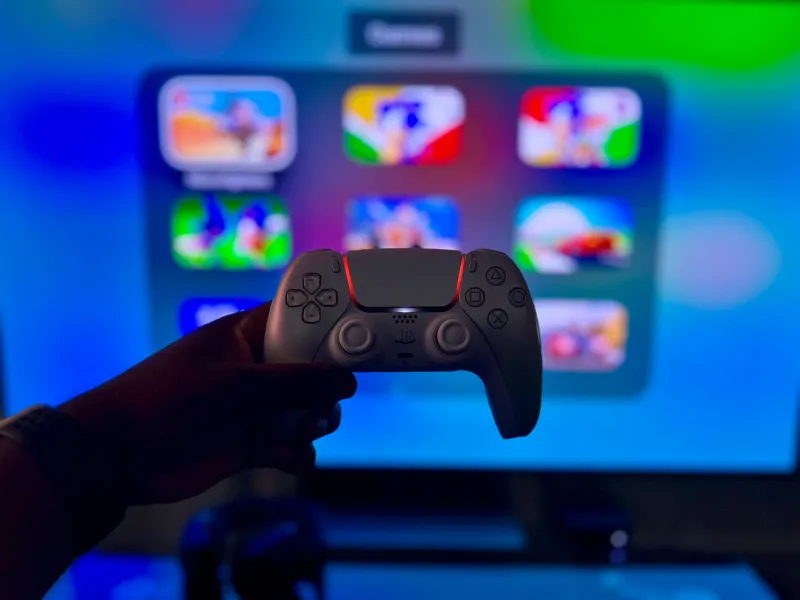
- Alternate controllers: If someone brings an adaptive controller, fight stick, or larger gamepad, make sure there is a USB port or adapter and table space for it.
- Haptics and vibration: Some players find rumble distracting or painful. Know where the setting lives.
You do not need to be an expert. You need to be willing to hand over the settings menu and say, take your time.
Readability: Subtitles, Text Size, and UI Scale
If your club plays on a TV, sit where players actually sit and look at the screen. Can you read the quest text from the couch? Are the subtitles on? Is the UI scale set for a monitor instead of a living room?
Turn subtitles on by default. Increase text size if the game allows it. Avoid games with tiny unreadable fonts for group play, or at least warn players before they commit to a 40-minute session. For board games, make sure cards are readable across the table and that the rulebook has a large-print option if available.
Color and Vision Settings
Colorblind modes are not a niche feature anymore. Check the display settings before game night and turn on the mode that fits the player. But do not stop at the menu. Look at the actual game: does it rely on red versus green icons? Do the board game pieces differ only by color? If so, add patterns, labels, or a shape reminder.
A simple test: take a screenshot or look at the board from across the room. If you cannot tell two key elements apart without color, the setup needs a fix.
Seating, Space, and Comfort
Good seating is accessibility. Make sure there is at least one chair without arms, space for a wheelchair or walker, and a table height that works for the controllers or cards. Keep cables out of walkways. Put the snack table within reach but not in the middle of the play space. If someone needs to stand or pace during a break, leave a clear path.
Do not reserve the good chair for the host. The host can sit anywhere. The player who needs the good chair should get it without a committee meeting.
Noise, Lighting, and Sensory Breaks
Game night is loud by default. That is part of the fun, but it can also be a wall. Lower the TV volume a notch. Keep a quiet room or hallway available for anyone who needs five minutes away from the crowd. Dim harsh overhead lights if you can, and avoid strobe or flashing effects in games when possible.
Build a sensory break into the schedule: a 10-minute pause between rounds, a snack break with no game talk, or a designated low-noise corner. Announce the break to everyone, not just the player who needs it. That is how you avoid singling anyone out.
The 10-Minute Pre-Game Walkthrough
Run this before the first controller is picked up:
- Subtitles on, text size checked.
- Colorblind mode set and tested.
- Controller remapping and sensitivity offered.
- Seating and table space clear.
- Volume lowered, quiet space identified.
- Break time announced.
- RSVP accommodations reviewed privately.
That is it. Ten minutes, no budget, no special equipment. The result is a room where more people can actually play.
Make It a Habit, Not a Favor
The goal is not to throw an accessibility-themed game night once a year. The goal is to make these checks as routine as buying snacks and charging controllers. When a club normalizes accessibility, players stop worrying about whether they will be a burden. They just show up and play.
That is the welcome mat. Not a speech. A setup that says, without saying it, we planned for you.