Too Many Players, Not Enough Chairs: Splitting Your Game Club Without Splitting the Friendship
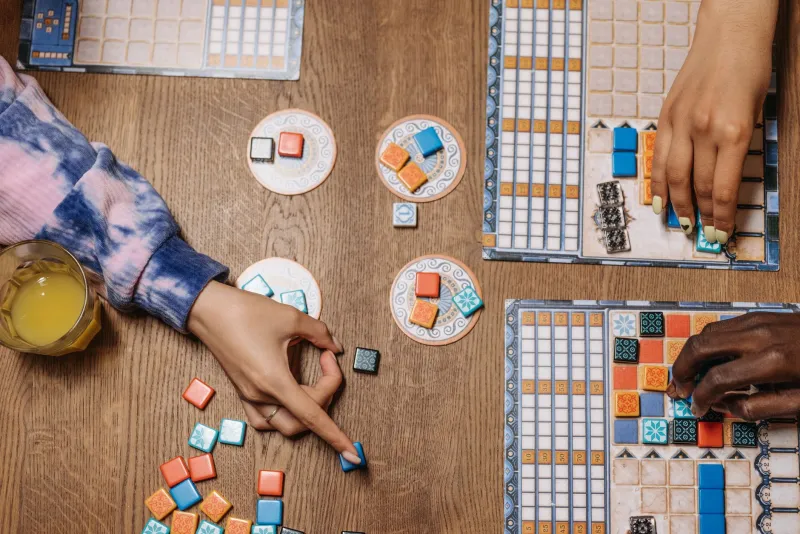
Every club founder has a moment they don't brag about. Ours came last spring, when eleven people showed up to a game night built around one table, one TV, and one very patient host. Someone sat on a folding chair someone else forgot they'd brought. Someone else played the whole night from the kitchen counter. It was a fire hazard with snacks.
Here's the thing nobody tells you: a club that's outgrowing its space is a club that's winning. But if you handle the split badly, you can undo two years of good vibes in a single week. So let's talk about the two-table problem — and how to solve it like a grown-up clubhouse.
First, Make Sure It's Actually a Problem
Before you start redrawing the seating chart, ask whether the crowding is chronic or a fluke. Big groups swell around holidays, new game releases, and the first warm Tuesday after a long winter. If you've had three or more packed sessions in a row, and people are commenting on it, it's real. If it was one weird week, just add a folding chair and move on.
A good gut check: are people waiting for a turn, standing around, or quietly peeling off early? When members start skipping nights because the lobby's "too full anyway," you've got a split situation on your hands.
Two Tables or Two Nights?
You've got two basic options, and they feel very different from the inside.
Two tables, one night. Everyone still shows up at the same time, but you run parallel games — one table on the party game, one on the longer strategy title, or two lobbies if you're online. This keeps the club feeling like one club. The tradeoff is you need the space (or the bandwidth) and your hosts will get their steps in.
Two nights. The classic expansion move. Squad A plays Tuesdays, Squad B plays Thursdays, and you run a monthly all-hands so the whole crew still sees each other. This works great for online clubs where the only real limit is how many people want to log on at once.
Most clubs start with two tables and graduate to two nights. Don't skip the line — splitting too early can make a medium problem permanent.
The Rotation Question: A-Squad and B-Squad Anxiety
Here's where feelings get involved. The moment you label one group the "A table," you've invented a B table, and nobody wants to be on it. We've watched a perfectly healthy club nearly collapse over exactly this.
The fix is simple: rotate on a schedule, and make the rotation public. A shared spreadsheet or group chat post with the next month's assignments kills 90% of the grumbling. People don't actually mind which table they're on — they mind not knowing, or suspecting the deck is stacked.
A few rotation styles we've seen work:
- The hat draw. Names in a virtual hat each month. Pure chaos, total fairness, and it mixes people who'd otherwise never share a table. Great for casual clubs.
- The swap. Split the group roughly in half, then trade two or three people between tables every month. Keeps some continuity, keeps things fresh.
- The self-select with a cap. Let people pick their table until one hits the cap, first-come-first-served. Easy, but your quietest members will always end up wherever there's room — check in on them.
Avoid the temptation to "balance skill levels" by hand every single month. That's how a friendly club starts feeling like tryouts.
Captains: Yes, But Pick Them Carefully
Squad captains can be a great thing — one point person per table for scheduling, snacks, and game picks. The mistake is making it a title people campaign for or, worse, appointing your best friend.
Instead, rotate the captaincy along with the table assignments. A month at the helm of Table B is a job, not an honor, and framing it that way keeps egos out of it. Captains pick the game rotation, wrangle their table's late arrivals, and report back on what's working. It's also a sneaky-good leadership pipeline — some of your future event organizers are sitting at Table B right now, waiting to be asked.
Keep One Club, Even With Two Tables
This is the part that matters most. A split is only a split if you let it be. Protect the stuff that made your club worth joining in the first place:
- One group chat. Two tables, one thread. Banter flows across the divide.
- A monthly all-hands. Big multiplayer night, potluck, tournament — anything where both squads share a room (or a server).
- Shared traditions. If Tuesdays end with the same victory ritual, Thursdays get it too. Copy-paste the culture.
- Cross-table events. Occasionally draft mixed squads for a tournament. Nothing dissolves "us vs. them" faster than winning together.
Growth Is the Whole Point
Six months after our eleven-person squeeze, we were running two tables and a monthly bracket, and nobody missed the folding-chair era. The clubs that last aren't the ones that stay small — they're the ones that grow without making anyone feel like a spare part.
So if your game night is bursting at the seams, congratulations. Pull the second table out of the garage, shuffle the names, and deal everybody in.